Sovereignty Through the Lens: Protocols for Indigenous Documentary Storytelling
Rethinking the Arctic Frame Through Narrative Sovereignty
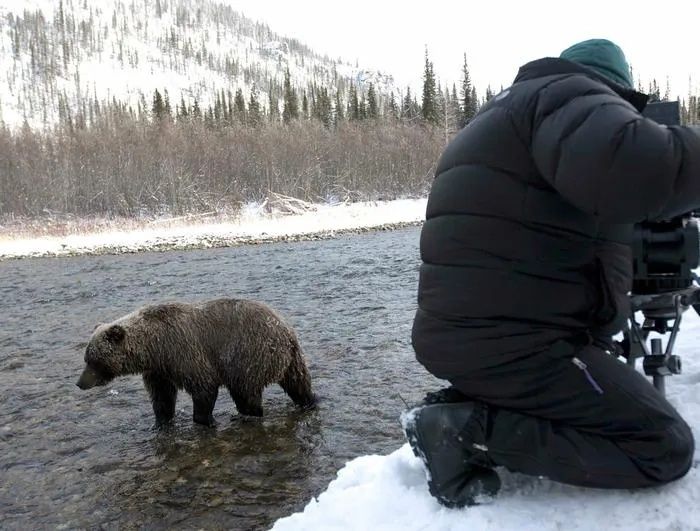
For much of film history, the Arctic was treated as a distant visual frontier rather than as a lived cultural space. Visiting crews arrived with Southern institutional funding, predetermined questions, and editorial authority that remained largely outside the communities being filmed. The resulting documentaries often prized remoteness, endurance, crisis, and spectacular landscape while reducing Indigenous people to witnesses, symbols, or sources of local color. Such images could circulate widely through festivals, broadcasters, museums, and classrooms even when the people represented had little control over how their knowledge, likenesses, or stories were used.
Narrative sovereignty changes the position of the camera. Indigenous people are not passive subjects waiting to be interpreted; they are self-determined storytellers, producers, editors, researchers, cultural advisers, and rights holders. This shift is not achieved simply by adding an Indigenous voice-over or hiring a local consultant after the project has been designed. It requires shared authority from the first conversation through final distribution. Festivals also participate in this transformation. A program determines which histories are made visible, what context audiences receive, and whether a film is presented as an isolated spectacle or as part of a living cultural conversation.
From Extraction to Authorship in Circumpolar Visual Arts
The difference between extractive coverage and community-grounded authorship begins with who defines the story. Southern institutions have often treated the circumpolar North as a field site, collecting images and testimony for audiences elsewhere. In that model, local knowledge may be mined for authenticity while budgets, equipment, post-production, credit, and long-term benefit remain concentrated in southern production centers. An Inuit critique of Canadian Arctic research makes a parallel point: moving from research conducted “on” Inuit to research conducted “with” Inuit is not enough when governance, funding, and policy relevance still sit elsewhere. The more durable standard is knowledge produced by Inuit for Inuit, with Indigenous systems of evidence recognized as rigorous in their own right.
In documentary practice, this means treating land-based expertise, oral communication, language, memory, and community gatherings as more than atmospheric material. They can shape the film”s structure, pacing, ethics, and definition of evidence. A hunting route, an account of changing ice, or a story carried through family may not fit a conventional interview format, yet it can contain detailed environmental observation and intergenerational analysis. Creative collections such as Circumpolar Connections demonstrate how Indigenous writers and artists create geographical knowledge through language, visual response, embodied mapping, and place-making. The Arctic becomes not an empty backdrop, but a network of relationships interpreted through multiple Indigenous national and regional perspectives.
Critical scholarship also challenges the colonial aesthetics of the polar sublime, in which vast white landscapes are made to signify purity, danger, disappearance, or the impending loss of nature. Lisa E. Bloom”s Climate Change and the New Polar Aesthetics examines feminist, Inuit, Black, Indigenous, and collaborative approaches that complicate this familiar visual grammar. For filmmakers and programmers, the key lesson is that innovation does not depend only on new cameras or immersive formats. It can arise through changed relationships to authorship, archive, land, and audience.
- Move from the Arctic as scenery to the Arctic as homeland, workplace, archive, and relation.
- Recognize Indigenous languages and knowledge systems as structural elements of the film, not decorative additions.
- Replace the single authoritative narrator with layered, accountable forms of authorship.
- Ask who benefits from production, who controls circulation, and who can challenge the final cut.
Core Pillars of Collaborative Protocols and Pathway Standards
Collaborative production is not a softer version of extraction. It is a different production architecture. Extractive practice typically begins with an outside brief, seeks access through a short-term transaction, records material according to an external schedule, and reserves editorial and commercial decisions for the commissioning institution. A participatory model begins earlier, builds relationships before filming, and accepts that the community may alter the project”s purpose, timing, form, or limits. This can require more resources, but it also produces stronger cultural accountability and more durable creative work.
The Canadian guide On-Screen Protocols & Pathways, developed through consultations with Indigenous screen creators and community participants, stresses that protocols vary among nations, communities, and individuals. No universal checklist can replace local guidance. Consent therefore needs to be free, prior, and informed, while remaining ongoing rather than being treated as a single release signed at the beginning. Elder consultations may be appropriate where cultural history, ceremony, land-based knowledge, or community memory is involved, but elders should not be positioned as symbolic approval figures. Their time, expertise, and decision-making authority require clear recognition and compensation.
Narrative intellectual property must also be addressed in practical terms. Agreements should identify who owns footage, translations, photographs, recordings, archival materials, subtitles, stills, promotional excerpts, and future adaptations. Productions dealing with trauma or painful histories may require cultural and emotional supports, community health workers, ceremony, smudging, or other forms of care identified by the community. Cultural sensitivity training can help, but it cannot substitute for accountable structures, local leadership, or the willingness to stop filming when continuing would cause harm.
| Transactional production | Participatory co-creation |
|---|---|
| Outside team defines the premise and timetable | Community partners help shape the premise, timing, and scope |
| Consent is treated as a one-time release | Consent is revisited as circumstances and editorial choices develop |
| Local people primarily provide access or testimony | Local collaborators hold creative, editorial, and cultural authority |
| Footage and rights remain with the external producer | Ownership, access, credit, and future use are negotiated transparently |
| Benefits end when filming ends | Training, employment, screenings, archives, and revenue support longer relationships |
Practical Pathways for Cross-Cultural Field Collaborations
Responsible collaboration becomes credible when principles are translated into decisions that can be documented and reviewed. Before a camera enters a community, producers should identify the relevant nation, local authority, cultural advisers, and potential knowledge holders. The project brief should explain intended audiences, funding relationships, distribution plans, possible risks, and editorial uncertainty in accessible language. Consent verification should include a process for withdrawal, correction, restricted access, or delayed release where circumstances change.
- Begin with accountable engagement. Build relationships before requesting interviews or access to culturally sensitive sites. Confirm who has authority to speak on a subject, compensate consultation fairly, and create a community accountability plan with named responsibilities, review points, and procedures for addressing harm.
- Share authorship throughout production. Establish meaningful editorial credits, hire local crew where possible, and create mentorship rather than symbolic consultation. Indigenous collaborators should have access to production knowledge, equipment, post-production conversations, translations, and budget information. Knowledge stewardship should distinguish between material intended for public circulation and material that must remain private or community controlled.
- Return the work in usable forms. Repatriation can include copies of rushes or final footage, local-language versions, community screenings, agreed educational materials, and clear screening rights. Festival premieres should not become the only moment when a community can see its own story. Distribution agreements should address archives, online access, classroom use, excerpts, and future festival invitations.
Academic training can help filmmakers understand the environmental, political, and cultural contexts behind a production, provided it does not replace community authority. Interdisciplinary programs such as the University of Alaska Fairbanks” Arctic and Northern Studies connect climate, sustainability, Indigenous issues, subsistence, politics, history, geography, energy, and the arts. Such frameworks encourage producers to see a film not as an isolated cultural product, but as part of wider questions about policy, land, environmental change, and community well-being.
Collaboration also benefits from infrastructure that makes Indigenous expertise visible and reachable. The Kin Theory Indigenous media makers database was created partly in response to the industry”s recurring claim that it does not know whom to hire. Its wider significance is institutional: access to Indigenous creators must be built into commissioning, financing, festival invitations, and co-production networks rather than left to informal searching. The database”s emphasis on coalition building and “co-liberation joy” points toward a film culture in which relationships are not merely instruments for gaining access, but part of the work”s creative and political value.
Curating with Care in International Festival Spaces
A festival does more than display films. It frames them through catalog language, publicity, venue design, introductions, awards, scheduling, and the conversations that follow a screening. Programming an Indigenous Arctic documentary without context can reproduce the very distance the film may be challenging. A thoughtful curatorial note should identify the filmmaker”s position, the community context, the languages present, and any relevant content considerations without explaining the work away. Where a film has specific protocols around photography, recording, or audience behavior, those requirements should be communicated clearly and respectfully.
Tokenism is avoided when Indigenous cinema is treated as a field of distinct national, regional, linguistic, and aesthetic practices rather than as one representative category. A Sámi work, an Inuit work from a particular region, and a film by an Indigenous filmmaker elsewhere in the circumpolar North should not be collapsed into a generic “Arctic” identity. Festival lineups can create room for comparison while preserving difference, pairing films through formal or thematic dialogue rather than geographic convenience. Interactive and immersive works deserve the same scrutiny. As scholarship on interactive cinema demonstrates, participation does not automatically produce democratic agency; audience choices remain shaped by technology, narrative design, institutional access, and historical power.
- Commission catalog copy that names context and avoids exoticizing language.
- Pay filmmakers, speakers, cultural advisers, and moderators fairly for festival labor.
- Build Q&As around authorship, method, language, land, and audience responsibility.
- Use panels to examine production ethics rather than treating Indigenous filmmakers as representatives expected to explain an entire region.
- Make space for community-led screenings, local-language presentation, and feedback after the festival.
Transforming the Northern Horizon of Documentary Art
Narrative sovereignty leaves a lasting mark because it changes more than the image on screen. It redistributes authority, strengthens local production capacity, protects cultural knowledge, and creates records that communities can use on their own terms. It also expands documentary form. When filmmakers work with Indigenous concepts of time, place, kinship, memory, and responsibility, the result may move beyond the assumptions of the conventional investigative feature or observational portrait. The film can become an encounter shaped by accountability rather than a report extracted from a location.
For producers, the invitation is to budget for relationships, rights, translation, care, mentorship, and return. For programmers, it is to build lineups that recognize Indigenous national cinemas as central to contemporary film culture, not as seasonal additions to a northern theme. For audiences, it is to approach screenings with curiosity and attention to the conditions behind the image. The strongest Arctic documentary practice does not merely point a lens northward. It supports storytellers who determine where the lens belongs, what it may reveal, and how the story continues after the festival lights come up.