Taming the Blinding White: How Colorists Grade Harsh Snowscapes Without Sacrificing Skin Tones
The High-Albedo Dilemma in Northern Cinematography
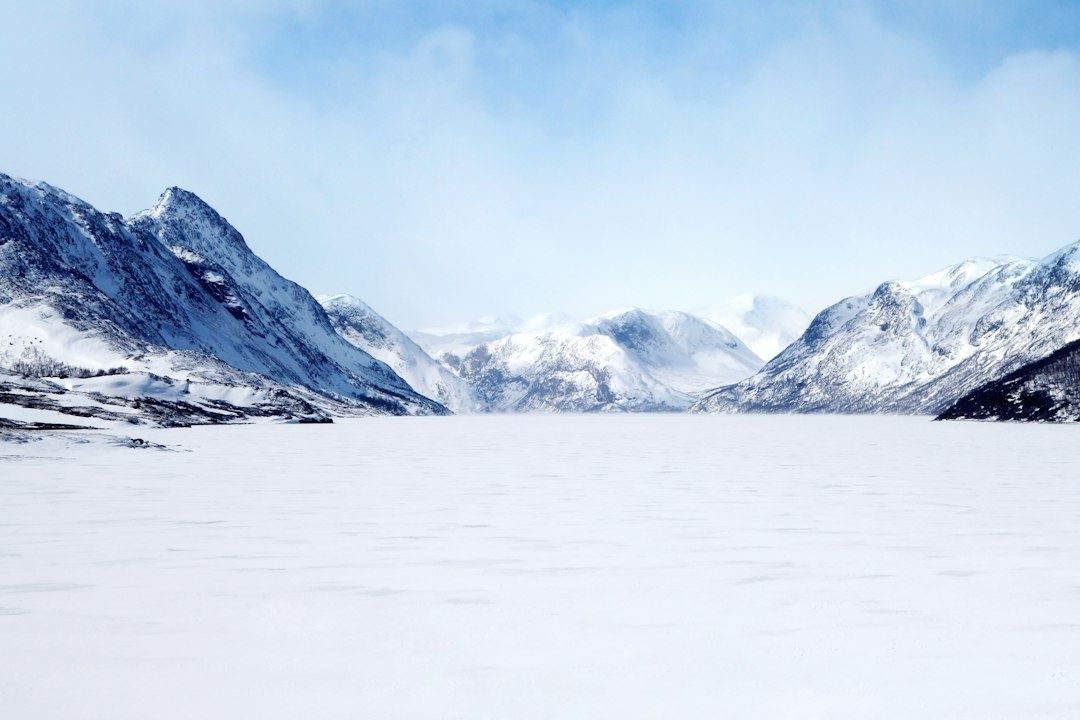
Snow is one of cinema”s most demanding subjects because it is never merely a background surface. Across a frozen plain, a mountain face, or an urban street after a storm, snow becomes a vast reflector that redirects daylight into every corner of the frame. Its apparent simplicity is therefore deceptive. A winter image can contain deep blue shadows, silver midtones, nearly colorless atmospheric haze, and intensely bright highlights within a single composition. The result is a visual paradox familiar to cinematographers working in Arctic and sub-zero conditions: the landscape appears blank, yet the image contains an unusually complex distribution of light.
The grading challenge begins when that brightness approaches the limits of the capture and display chain. Clipping the upper range may produce a clean, graphic white, but it removes the small variations that describe wind-packed ridges, granular ice, blowing powder, and distant terrain. Compressing everything too aggressively can be equally damaging, flattening the landscape and making faces appear pale or chemically desaturated. In winter cinema, legal luminance ceilings must coexist with facial warmth, eye detail, and the emotional information carried by skin. The best grades do not simply make snow darker. They preserve its authority as light while ensuring that human presence remains the dramatic center of the frame.
Color Science and Linear Workflows in Extreme Environments
A reliable winter grade starts before the creative look is applied. Scene-referred color management treats recorded values as descriptions of light in the photographed scene rather than as finished display values. This distinction matters when a snowfield and a shaded face occupy the same shot. A scene-referred pipeline, often built around ACES or another carefully configured wide-gamut workflow, gives the colorist room to shape the relationship between highlights, midtones, and shadows before a display transform determines how that image appears on a particular screen.
Linear-light processing is especially important for operations that simulate physical behavior, including exposure changes, compositing, blur, and glow. As the technical explanation of linear light and ACES workflows makes clear, display-referred values do not correspond directly to proportional amounts of physical light. A value that appears halfway between black and white is not necessarily half the captured illumination. Treating it as such can produce implausible clipping and unnatural highlight behavior, precisely the problems that become conspicuous in high-albedo environments.
It is also essential to distinguish the sensor”s exposure limit from the display”s tone-mapping limit. Once a sensor channel has clipped, no tone curve can restore the missing snow texture. Conversely, image information that remains above the intended display range may be shaped through a controlled roll-off, allowing bright snow to retain tonal distinctions rather than collapsing into featureless white. The digital intermediate, the stage in which picture elements are conformed and given a coherent visual treatment, is therefore more than a finishing checkpoint. Understanding the modern digital intermediate helps artists preserve highlight detail without distorting skin tones.
- Expose for information: protect important highlight detail while monitoring faces, specular reflections, and shadow separation rather than relying on a single average reading.
- Transform deliberately: keep scene-referred adjustments separate from the display transform so that a later change in output format does not undermine the grade.
- Watch hue behavior: strong highlight compression can shift blue-white snow toward gray or push warm facial colors toward orange, especially when channels approach different limits.
- Validate across displays: compare a calibrated reference monitor with the intended SDR or HDR deliverable, since the same roll-off can read very differently at different luminance levels.
ACES is not a magic solution, and an incorrectly configured transform can create its own problems. Tone mapping may desaturate yellow and gray relationships, alter blue intensity, or make a carefully exposed image appear washed out. The practical lesson is to monitor the entire chain, from camera encoding through working space and output transform. A colorist should know whether the current image is scene-referred, display-referred, or already passing through a creative look. Without that map, attempts to rescue snow often become compensatory corrections that damage the face.
Balancing Spectral White and Human Warmth
Snow is usually described as white, but photographed snow is a field of spectral relationships. Open shade may lean cyan or blue, reflected sky can cool the underside of a hat, and low winter sun can turn a ridge pale gold. The face standing inside that environment receives the same illumination, yet human viewers are unusually sensitive to whether skin still feels alive. A technically neutral grade can therefore look emotionally cold if it removes the subtle reds, ambers, and rose tones that communicate circulation and proximity.
Modern HDR workflows expand the available highlight capacity, but they do not eliminate the need for judgment. HDR displays can provide additional highlight headroom and deeper shadow separation, while SDR delivery requires a more compressed translation. The same snowbank may glow convincingly in HDR yet become clipped or gray when reduced for SDR. The grading task is not to force both versions into identical values. It is to preserve the intended hierarchy, ensuring that the brightest snow supports the scene without competing with eyes, mouths, or gesture.
| Challenge | Traditional risk | Contemporary grading response |
|---|---|---|
| Broad luminance ratio | Faces disappear when exposure is lowered to protect snow | Use scene-referred exposure control, localized lift, and a gentle highlight shoulder |
| Specular snow reflection | Snow becomes clipped chalk white or distractingly brilliant | Separate diffuse snow from true sparkle and compress only the upper highlight region |
| Cold environmental spill | Skin loses warmth and appears gray or cyan | Track facial regions and restore restrained warmth without turning the subject artificially orange |
| Multiple deliverables | A look built for one display fails in another format | Evaluate HDR and SDR transforms independently while preserving the same emotional contrast |
Facial balance depends on more than a skin-tone qualifier. Local contrast around the eyes, nose, and lips can make a face feel present even when its average chroma is modest. A small warm bias in the midtones may be more convincing than a broad saturation increase. Likewise, the coolness of the background should be judged in relation to the subject. A blue snowfield can remain expressive if the face contains believable internal variation. Overcorrecting the environment to make skin appear warm often removes the very sense of exposure and cold that gives the scene its meaning.
Selective Isolation Techniques in the Color Suite
Winter grading rewards separation, but separation should be built with restraint. A broad global correction may be useful for establishing the atmosphere, yet the final balance usually requires isolated control of talent, foreground snow, distant drifts, and reflective objects. Qualifiers can identify facial hues, while tracked windows can follow a performer through wind, falling snow, or changing exposure. The aim is not to make the subject look cut out. It is to prevent the background”s extreme brightness from dictating the face”s density and color.
Spatial frequency thinking offers another useful safeguard. Fine facial texture, including pores, eyelashes, hair, and fabric fibers, occupies a different frequency range from broad color and luminance transitions. Retouching or grading the low-frequency tonal layer can even out a cold, uneven wash while leaving high-frequency detail intact. The principle described in frequency separation practice is directly relevant to finishing: preserve texture and micro-contrast, and avoid solving a tonal problem by blurring the evidence of a real face.
Snow itself benefits from a similarly selective approach. A foreground sparkle may need a different treatment from a distant white horizon. Applying the same compression to both can make the frame feel processed and reduce the perception of depth. Curves, luma keys, and soft tracked shapes can reduce glare in the most aggressive zones while leaving broad snow planes open and luminous. The colorist should also check whether a highlight adjustment is changing hue. A neutral roll-off that quietly pulls blue out of snow may be more disruptive than a slightly brighter but chromatically consistent highlight.
- Establish the scene balance: set exposure, contrast, and white balance in a scene-referred space before building detailed windows or qualifiers.
- Identify the emotional anchor: determine which faces, gestures, or objects must remain readable, then protect their midtone density and color relationships.
- Track selectively: use windows and qualifiers together, refining edges where hats, scarves, frost, or blowing snow complicate the isolation.
- Roll off the snow: shape the upper curve gradually, preserving variation in ridges and reflections rather than applying a blunt global reduction.
- Check texture at two scales: inspect the image close enough to see pores and grain, then zoom out to judge whether the face still feels natural within the landscape.
A successful isolation is often invisible to the audience. The viewer should not sense that the face has been lifted or that the snow has been selectively restrained. Instead, the image should feel optically plausible, as though the camera had managed an impossible exposure. This is where tracking discipline matters. Windows that drift, qualifiers that grab reddish fabric, or matte edges that reveal themselves against white snow can undermine an otherwise sophisticated grade.
Archival Lessons and Sub-Zero Aesthetic Heritage
Historical winter footage offers a valuable corrective to the expectation that every snow image must be perfectly clean and evenly controlled. Celluloid cinematographers working in high-latitude daylight contended with film stock limitations, physical filtration, processing choices, and the practical difficulty of protecting emulsion detail in brilliant conditions. Their images often contain dense shadows, luminous skies, and visible texture in the snow because the limitations of the medium encouraged careful exposure and purposeful framing rather than indiscriminate correction.
For contemporary artists, archives can reveal how much visual information survives when the image is allowed to retain its environmental character. Collections such as the Alaska Film Archives demonstrate how early filmmakers confronted polar daylight through physical filtration, camera technique, and an acute awareness of place. The footage should not be treated as a template to imitate mechanically. Its value lies in showing how tonal depth, pacing, and atmosphere can work together. Long views across empty terrain may feel dramatic because the image gives the eye time to register small changes in brightness and texture.
- Study the negative space: notice how historical frames use snowfields as compositional silence rather than filling every area with detail.
- Observe practical contrast: compare faces in direct sun, open shade, and reflected light to understand how natural warmth survives within cold surroundings.
- Separate age from intention: scratches, fading, and chemical shifts are not automatically part of the original aesthetic, while grain structure and exposure choices may be.
- Translate rather than imitate: use archival footage to guide tonal relationships, not to justify arbitrary blue casts, crushed blacks, or artificial distress.
Modern restoration work reinforces the same lesson. A successful restoration does not simply maximize clarity; it reconstructs hierarchy and period character while keeping the image legible. That philosophy translates neatly into contemporary grading. A pristine digital snowfield can still possess historical depth if the grade respects its tonal intervals, while a heavily stylized palette can feel shallow if every white is pushed toward the same cyan and every face is warmed by the same preset.
Mastering the Cold Light for Uncompromised Storytelling
The most convincing winter grades treat technical control and emotional storytelling as complementary rather than competing goals. Dynamic range management gives the image room to breathe, but selective isolation determines where the audience looks and what it feels. Snow should remain powerful enough to communicate exposure, distance, danger, or silence. Faces should retain enough chromatic and textural life to communicate fear, tenderness, fatigue, and resolve. Neither element should be sacrificed to make the other appear correct.
A disciplined workflow for snow-heavy material can be summarized in a few habits:
- Protect capture information before attempting a look.
- Perform exposure and tone operations in the appropriate scene-referred or linear context.
- Use display transforms deliberately, with separate attention to HDR and SDR behavior.
- Isolate faces and narrative details instead of applying excessive global correction.
- Preserve facial texture and micro-contrast while shaping broad tonal transitions.
- Allow snow to carry controlled variation, from blue shadow to warm reflected light.
Harsh winter light is not an obstacle to be erased. It is an active narrative element, capable of making a character appear exposed, resilient, isolated, or unexpectedly intimate. When the colorist reins in the blinding upper range without flattening the world, the frame gains both physical credibility and emotional precision. The cold remains visible, but the people inside it remain fully human.