
Beyond the Polite Applause: Why Indie Film Festivals Are Ditching the Traditional Q&A
The Awkward Silence of the Floating Microphone
The standard post-screening Q&A has become one of cinema”s most recognisable rituals, and one of its least reliable. The lights rise, a moderator offers a brief introduction, and a microphone begins its slow journey through the room. Sometimes a precise, generous question opens a door into the film. More often, the exchange stalls in a thicket of long preambles, technical queries that could have been answered in a programme note, or audience comments that quietly become speeches. The filmmaker waits beneath the spotlight while the room searches for momentum.
The problem is not that audiences lack curiosity. It is that the format often gives curiosity no useful architecture. A single microphone, a raised stage and a strict time limit create a hierarchy before anyone speaks. The director or producer is positioned as the authority, while the audience is reduced to a sequence of isolated voices competing for access. For viewers accustomed to collaborative online spaces, public workshops and participatory cultural events, this can feel less like dialogue than a ceremonial handover of expertise.
Independent festivals are beginning to recognise that the screening room can do more than host a film and its immediate afterlife. It can become a workshop, a civic forum, a craft salon or a place where local knowledge meets artistic practice. From northern storytelling communities to international documentary gatherings, the most compelling experiments are replacing the floating microphone with designed encounters that allow more people to contribute, listen and remain connected after the credits.
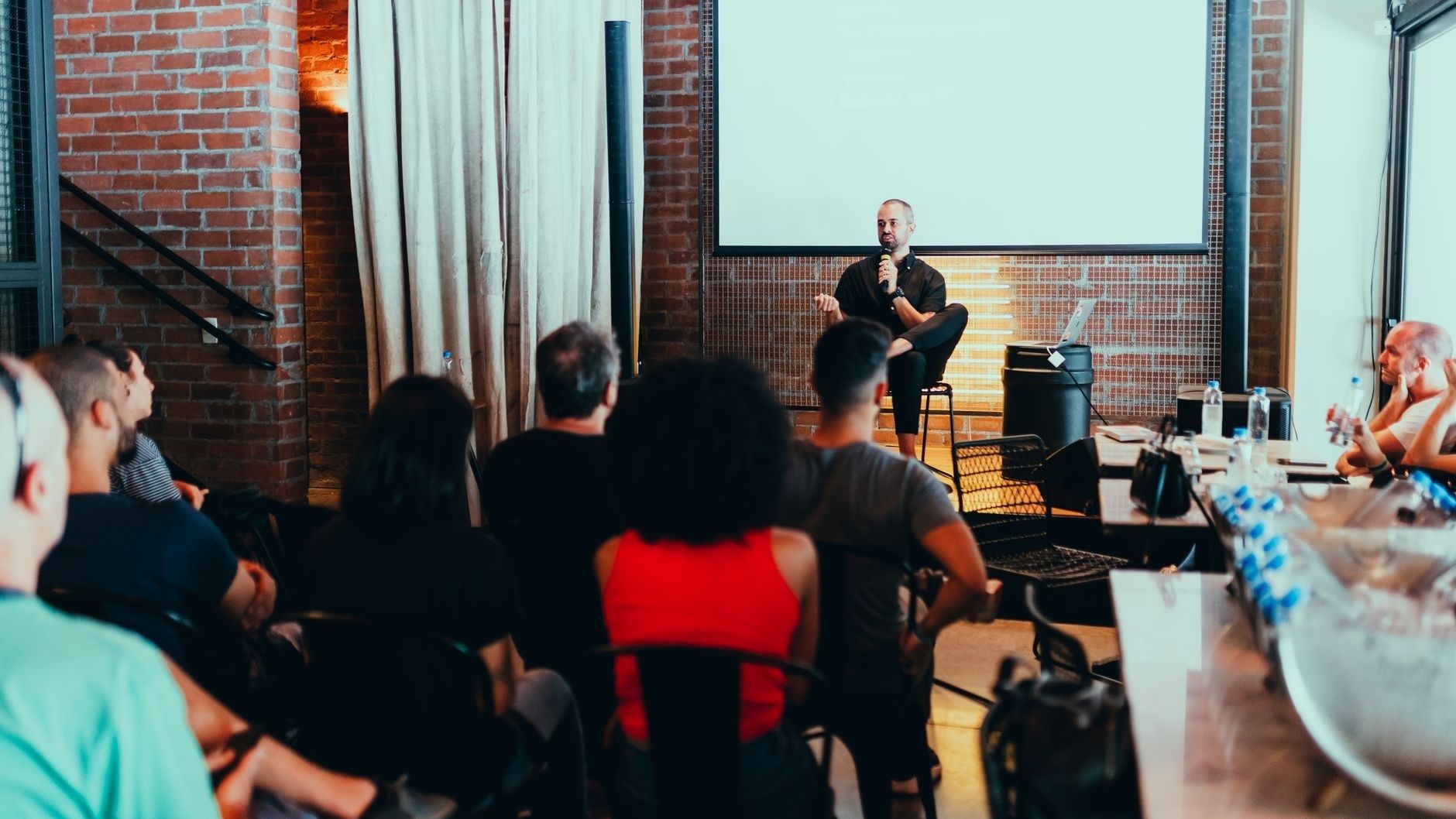
Why the Conventional Post-Screening Setup Fails Audiences and Creators
The conventional arrangement places filmmakers above the audience in both a literal and symbolic sense. A small group sits in a row under stage lighting, while viewers remain in darkness, often unsure whether their question is sufficiently sophisticated to be heard. This spatial design reinforces the idea that expertise belongs onstage and that participation is an invitation granted by a moderator. It can be especially intimidating for first-time festival attendees, young viewers, people communicating in a second language and communities historically underrepresented in arts institutions.
Research into public participation in media arts festivals suggests that contemporary audiences increasingly expect more than access to finished work. A dissertation examining Canadian independent media arts festivals from the early 2010s through the mid-2020s describes participation as a central programming expectation, including co-creation, learning, cultural mediation and creative self-expression. This shift is also consistent with broader findings in the National Endowment for the Arts research on arts participation, which treats cultural engagement as a pattern of active public life rather than simply a count of tickets sold.
For filmmakers, the familiar format can be equally draining. Repeated questions about budgets, equipment, festival strategy and shooting locations may be useful in the right setting, but they can crowd out discussion of structure, ethics, performance, sound, editing and the difficult decisions that shape a film”s meaning. A director who has spent years refining a sequence may be asked to summarise the entire production in a few minutes. The result is often a polite exchange that satisfies the timetable without revealing much about the work.
- Hierarchy: the stage privileges professional authority while the audience remains largely anonymous.
- Limited access: only a small number of people can speak, usually under considerable time pressure.
- Repetitive content: logistical questions can displace discussion of artistic method and social context.
- Weak continuity: the conversation often ends when the microphone is switched off, with no route into further participation.
Interactive Salons and Intimate Industry Roundtables Taking the Lead
Curated salons and small roundtables offer a different social geometry. Instead of asking one filmmaker to perform expertise for an entire auditorium, they distribute attention among several participants. A moderator can place emerging artists beside mentors, researchers, local organisers or audience members with relevant lived experience. The conversation becomes less about extracting definitive answers and more about tracing connections between a film”s creative choices and the world around it.
The 2026 BFI Doc Society industry roundtables during the BFI London Film Festival illustrate the practical value of this approach. The free, open-access programme was designed for documentary filmmakers developing projects, considering distribution or seeking further career opportunities, with particular attention to working-class filmmakers and people from backgrounds underrepresented in the UK industry. Representatives from BFI Doc Society, the British Council, the Documentary Film Council, Tull Stories and Sheffield DocFest hosted discussions across four sessions. Each table was planned for approximately ten filmmakers and at least one organisational representative, creating a setting in which questions could move in both directions.
This is not merely a networking adjustment. It is a curatorial decision about who gets to ask, answer and shape the terms of the conversation. Sheffield DocFest”s expanded 2026 Filmmaker Challenge offers another useful model. Twelve filmmakers from Yorkshire, Cornwall and Wales receive mentoring, equipment and industry access while developing short non-fiction films around the theme “Realities in Motion.” A residential workshop covers the process from idea development through distribution, and the completed films receive a public screening alongside the mentor and festival representatives. The structure links production, mentorship and public exhibition rather than treating the filmmaker conversation as an isolated afterthought.
| Traditional Q&A | Salon-style discussion |
|---|---|
| One stage, one moderator and a large audience | Several tables or circles with a facilitator for each group |
| Questions are selected in real time | Prompts are prepared around a theme, craft issue or community concern |
| Filmmakers provide most of the expertise | Filmmakers, audiences, mentors and partners contribute different forms of knowledge |
| Discussion often centres on production facts | Discussion can explore ethics, form, representation, distribution and local relevance |
| Participation ends when the session closes | Notes, contacts, resources and follow-up events can extend the exchange |
For audiences, the salon format also reduces the pressure to formulate a perfect question in public. A participant may listen first, add a brief observation later and discover that another person”s experience provides the language needed to articulate a response. For filmmakers, the more intimate setting makes it possible to discuss uncertainty, failure and compromise without converting every answer into a polished promotional statement.
Turning Screenings into Living Civic Forums and Digital Labs
A participatory screening becomes especially powerful when a film”s subject is connected to a community capable of acting on its questions. Partnerships with non-profits, universities, youth organisations, libraries, museums and civic groups can move a discussion beyond the cinema lobby. A documentary about housing, migration, environmental change or public health might be followed by a facilitated conversation with local practitioners, a resource session, a mapping workshop or a meeting focused on a specific community need. The film remains central, but it becomes a catalyst rather than a sealed object.
The Beyonds Festival, held at the Palais des Nations in Geneva from 5 to 7 October 2026, demonstrates how creative programming can enter spaces usually dominated by policy language. Organised by the Beyond Lab at UN Geneva, the festival brought together young innovators, artists, policymakers, researchers and international partners through films, exhibitions, workshops, policy dialogues and institutional exchanges. Its themes included regeneration, constructive hope, debt to the future and the great unknowns. The design recognised that meaningful youth participation requires influence and collaboration, not consultation alone.
Academic work on festival innovation also points toward hybrid forms that combine digital interfaces with physical gathering. Research on the +RAIN Film Festival examines artificial intelligence, immersive media and interactive practices as ways to expand participation while preserving the communal value of festivals. The study cautions that digital reach can weaken physical presence if it becomes a substitute for encounter, but it also identifies opportunities for co-creation, immersive installations and audience agency. The full research is available through academic research on film festival innovation.
- Pair screenings with local organisations that can respond to the film”s themes.
- Use digital tools for collecting questions, mapping responses or extending discussion, not for replacing in-person exchange.
- Invite universities and community venues to host parallel conversations, workshops and exhibitions.
- Document participant contributions with consent, then return findings to the community through a later event or public resource.
Community venues are particularly valuable because they break the assumption that film culture belongs only inside a theatre. The 418 Project in Santa Cruz, for example, describes partnerships spanning independent film, civic dialogue, universities, performing arts, galleries, museums and cultural initiatives. Such networks allow a screening to become part of a wider cultural ecosystem. In a northern festival context, a similar model might connect cinema with libraries, Indigenous cultural organisations, schools, environmental groups, makerspaces and neighbourhood gatherings, allowing different forms of knowledge to share the same programme.
A Programmer Blueprint for Designing Participatory Screenings
Replacing a Q&A requires more than renaming it. The strongest programmes begin with a clear purpose, identify who should be in the room and design the conversation before the audience arrives. A participatory event should still respect the film”s integrity, protect vulnerable speakers and avoid turning community engagement into an unstructured demand for emotional labour.
- Start with the film”s live question. Identify the tension that can support collective inquiry, such as who controls a story, what evidence looks like, how a landscape is represented or what responsibility follows public testimony.
- Map the relevant voices. Invite the filmmaker, but also consider craftspeople, residents, advocates, scholars, youth participants and organisations connected to the subject. Keep the group small enough for genuine exchange.
- Choose the right room. Use circles, workshop tables or adjacent breakout spaces where possible. If the event remains in a theatre, lower the stage, bring chairs into the audience and make the facilitator visible as a guide rather than a gatekeeper.
- Prepare prompts, not scripts. Offer two or three open questions that invite interpretation and experience. Avoid prompts that simply ask the filmmaker to repeat the synopsis or explain every decision.
- Moderate for distribution. Set limits on speaking time, interrupt respectfully when one voice dominates and create deliberate openings for quieter participants. Anonymous written questions or small-group discussion can widen access.
- Build a second life for the event. Collect feedback, share resources, publish a short reflection or schedule a follow-up gathering. Participation gains credibility when audiences can see how their contributions shaped the festival.
Moderation is the hinge between an ambitious concept and a frustrating event. Facilitators should explain the purpose at the beginning, acknowledge access needs and establish boundaries around confidentiality, recording and respectful disagreement. They should also distinguish between disagreement and harm. A democratic conversation is not one in which every statement receives equal weight; it is one in which participants understand the conditions for speaking, listening and being accountable.
Feedback systems should measure more than satisfaction. Ask whether participants met someone new, gained a practical resource, felt able to contribute and would return for a related event. At a festival such as Anchorage International Film Festival, whose 2026 edition is scheduled for 4 to 13 December with screenings, workshops, filmmaker events, panels and professional discussions across Anchorage venues, these measures could help connect individual programmes across ten days. A Coffee Talk, craft session or community forum can then become part of a continuing pathway rather than a single item on a crowded schedule.
Embrace the Screen as a Catalyst for Collective Dialogue
The future of the independent festival Q&A is not necessarily silence, and it is not the elimination of filmmakers from public conversation. It is a more thoughtful distribution of attention. Curated roundtables, craft salons and civic forums allow the audience to become more than a pool of questions and the filmmaker to become more than a spokesperson. They honour the film by giving its ideas room to travel through different kinds of knowledge, experience and disagreement.
Programmers can begin with one screening and redesign the encounter around it. Filmmakers can ask for formats that make craft discussion possible rather than repeating promotional talking points. Moviegoers can look for festivals that treat participation as part of the artistic programme, not a courtesy appended after the credits. When the room is designed for exchange, cinema regains one of its oldest powers: bringing strangers together long enough to imagine a shared future.

