Echoes of the Tundra: The Rise of Contemporary Circumpolar Cinema
Dismantling the Frozen Lens of Arctic Filmmaking
For much of cinema history, the North has been framed from a distance. Western films have often treated the Arctic as a blank expanse, an exotic testing ground, or a spectacular backdrop for explorers, adventurers, and climate victims. Snow becomes shorthand for isolation, darkness for danger, and Indigenous presence is reduced to atmosphere, symbolism, or a narrative obstacle. Such images may be visually imposing, but they frequently conceal the social worlds, intellectual traditions, and political histories that make northern places lived territories rather than empty scenery.
Contemporary circumpolar cinema offers a decisive correction. Across Alaska, Northern Canada, Greenland, and Sápmi, Indigenous filmmakers are building a sovereign screen language grounded in land, community, language, and memory. For audiences seeking a deeper festival experience, the Arctic Indigenous Cinema programme illustrates how this movement is being supported through education as well as production. The shift is not simply a matter of adding Indigenous characters to established genres. It changes the grammar of the image itself, repositioning environment, duration, sound, and collective memory at the center of the story.
Landscape as Protagonist and Living Relative
In an extractionist tradition of filmmaking, landscape is commonly presented as property. The camera surveys a valley, coastline, or ice field as though it were available for conquest, scientific measurement, tourism, or resource development. The image may appear neutral, yet its composition can reproduce a colonial relationship in which land is valuable primarily for what it offers to an outside observer. Indigenous circumpolar cinema begins elsewhere. Land is not merely where the story happens. It is a relative, witness, archive, provider, and force that shapes human conduct.
This relational perspective produces distinctive cinematographic choices. Extended wide shots may remain with a shoreline after a character has left the frame, not because the narrative has paused, but because the shoreline continues to matter. A camera may observe a person preparing equipment, crossing snow, waiting for weather, or listening for animals without compressing those actions into rapid plot points. Ambient sound carries comparable weight. Wind, water, footsteps, birds, engines, and the low textures of ice can establish knowledge and feeling without explanatory dialogue. The result is not an ornamental use of nature, but an audiovisual recognition that human life is embedded in a larger field of relationships.
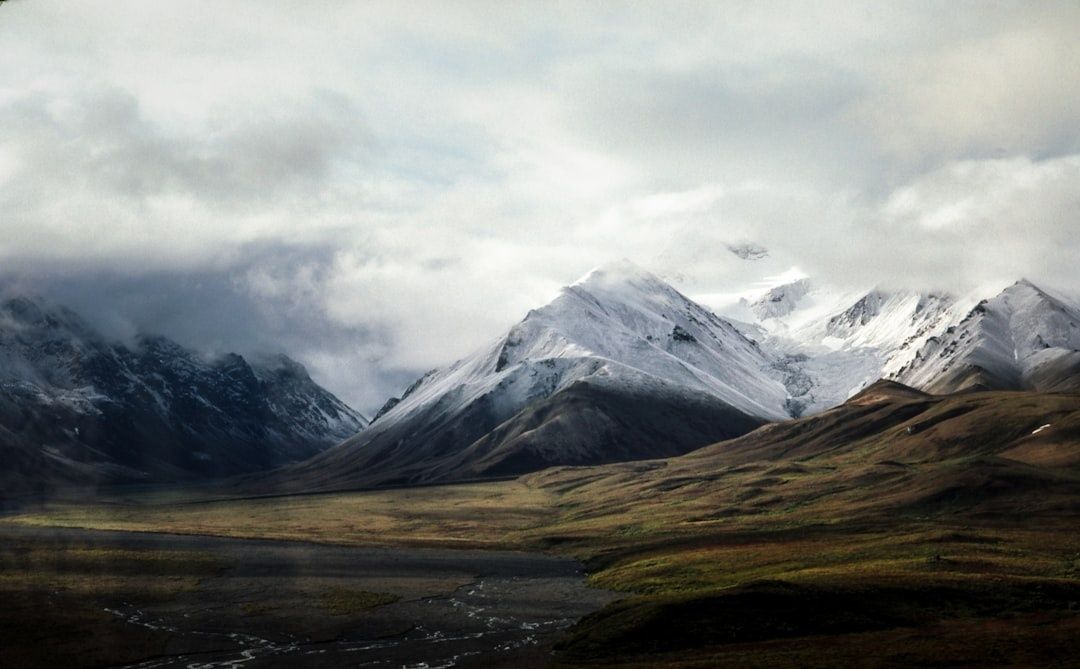
That difference can be especially important in festival settings, where films are often described through familiar categories such as survival drama, environmental documentary, or coming-of-age story. Circumpolar works may contain elements of all three, yet their spatial politics resist easy classification. The central questions are often not who conquers the landscape or escapes it, but who has the right to name it, remember it, inhabit it, and make decisions about its future. Research and teaching at the University of Alaska Fairbanks similarly connect Indigenous media with governance, oral history, resilience, resource management, and community knowledge.
- Colonial framing often treats land as scenery, territory, or resource.
- Indigenous framing presents land as an active relation with memory, agency, and obligation.
- Colonial narratives privilege outside arrival and individual conquest.
- Circumpolar narratives frequently emphasize continuity, responsibility, kinship, and collective presence.
Deconstructing the Three Act Paradigm with Circumpolar Temporality
The conventional three-act structure depends on escalation. A protagonist encounters disruption, pursues a goal through increasingly difficult obstacles, and reaches a decisive resolution. That model can be effective, but it is not universal. Circumpolar cinema often draws dramatic energy from seasonal recurrence, inherited memory, interrupted histories, and changes that become visible only over time. The story may move between generations rather than steadily forward, or return repeatedly to a place whose meaning changes as the audience learns more about it.
Silence, in these films, is not an absence of writing. It can be a form of testimony, resistance, listening, or cultural privacy. A pause may allow the audience to register a character’s relationship to a community rather than simply anticipate the next plot event. Communal memory also alters the scale of drama. An individual decision can carry the pressure of a family history, a language under threat, or a land-use conflict that reaches beyond the immediate scene. The book Sámi Media and Indigenous Agency describes media as a tool of cultural continuity and self-determination, linking contemporary storytelling to longer struggles over representation and political visibility.
| Mainstream dramatic model | Circumpolar Indigenous tendency |
|---|---|
| Linear movement toward a decisive climax | Cyclical, seasonal, or intergenerational movement |
| Individual protagonist as primary agent | Person, family, community, and land as interconnected agents |
| Conflict resolved through victory, defeat, or revelation | Conflict held within ongoing memory, obligation, or adaptation |
| Fast pacing signals narrative urgency | Duration, silence, and repetition create attention and significance |
Amanda Kernell’s Sami Blood demonstrates how these approaches can operate within a recognizable coming-of-age framework while unsettling its assumptions. The film follows Elle Marja, a Sámi teenager in 1930s Sweden, and frames her adolescent experience through the later image of an elderly woman attending her sister’s funeral. The movement between present and past makes personal memory inseparable from historical violence. Elle Marja’s desire to enter Swedish society is not presented as a simple triumph over tradition. Racism, forced assimilation, humiliation, and the impossibility of fully concealing one’s origins remain embedded in the journey.
Institutional Sovereignty and Creative Ecosystems
A self-determined cinema requires more than individual talent. It needs training, funding, archives, production infrastructure, distribution pathways, and spaces where filmmakers can develop stories without surrendering cultural authority. Across the North, Indigenous media initiatives are increasingly connecting these elements. They also recognize that sovereignty includes the right to decide how knowledge is recorded, who may access it, which languages are used, and how communities participate in the production process.
The University of Alaska Fairbanks provides one example through its Indigenous Media area of study, which treats Alaska itself as an immersive classroom. Students work with Indigenous communities, local storytellers, and media creators while studying the relationship between audiovisual practice and Alaska Native heritage. Works such as Power of Words by Wáats’asdíyei Joe Yates and Suŋauraq by Naqtuq Dommek point toward a regional practice in which filmmaking is connected to language, cultural documentation, and community presence rather than separated from them.
Cross-border cooperation is equally significant because circumpolar cultural geographies do not conform neatly to national borders. The University of Lapland’s two-year, English-taught Master of Arts programme in Arctic Indigenous Cinema, developed with Sámi Allaskuvla and Umeå University and supported through Interreg Aurora funding, is designed around that reality. Its curriculum combines Indigenous narrative traditions with dramaturgy, screenwriting, directing, production, research, and digital media. Such initiatives create professional networks linking Alaska, Canada, Greenland, and Sápmi while allowing regional differences to remain visible.
- Indigenous-led programmes strengthen control over narrative, language, and representation.
- Hybrid education models make specialist training more accessible across remote northern regions.
- Community-based archives preserve oral histories and audiovisual knowledge on local terms.
- Cross-border networks allow filmmakers to share resources without erasing distinct nations and traditions.
Landmark Circumpolar Works Reshaping the Global Festival Circuit
Sami Blood remains a crucial reference point because it makes assimilation intimate. Its teenage protagonist attempts to distance herself from Sámi identity after enduring racial inspection, segregation, and contempt. The film’s emotional force comes from the tension between self-invention and inherited belonging. Lene Cecilia Sparrok’s performance gives Elle Marja a guarded physicality, showing how shame can become posture, silence, and calculated movement. The film reached major international platforms, including Sundance, the Toronto International Film Festival, and Venice, demonstrating that a specifically Sámi history can command global attention without being translated into a generic universal drama.
Alaskan Native filmmaking expands the field through both short-form and feature storytelling. Short films are particularly important in regions where production budgets, travel distances, and access to equipment can shape what gets made. They can preserve language, stage community testimony, experiment with animation or video poetry, and respond quickly to environmental or political events. The Indigenous Media work associated with UAF shows how emerging filmmakers can learn through direct engagement with local communities, while the wider Alaskan ecosystem supports stories that move between documentary, fiction, oral history, and experimental form.
International festivals are gradually adapting to this creative plurality. The most responsible programmes do not place Indigenous films in a single marginal category or treat the Arctic as a seasonal theme. They provide contextual notes, language access, filmmaker conversations, and curatorial frameworks that acknowledge sovereignty rather than turning culture into spectacle. For audiences, the best approach is to follow the film’s own terms: listen for shifts in language, notice how time is organized, and consider what remains deliberately outside the frame.
- Begin with the filmmaker’s community, language, and production context rather than relying on familiar genre labels.
- Attend talks or discussions that explain local histories of colonization, land use, and cultural renewal.
- Pair a major feature with shorts from the same region to see how form changes with scale and purpose.
- Read festival materials carefully and support Indigenous-led distribution, education, and archive initiatives.
Charting the Future of Global Cinema from the High North
Circumpolar cinema is reshaping contemporary film language by challenging the assumption that drama must be driven by individual acceleration, visual mastery, and permanent forward motion. Its images ask audiences to remain with land, weather, labor, language, and memory. Its rhythms make room for forms of knowledge that are often excluded by industrial storytelling, including oral transmission, seasonal awareness, collective decision-making, and relationships that extend across generations.
The next stage of this movement depends on attention with discipline. Curators can programme Indigenous films as central works rather than cultural supplements. Scholars can analyze form without stripping it from sovereignty and community context. Audiences can arrive prepared to encounter different structures, not to measure every film against a familiar Western template. From the high North, a broader cinematic possibility is emerging: one in which place is alive, time is plural, and storytelling belongs first to the people whose worlds it carries.